
Can F-1 students work for US employers while temporarily outside America?
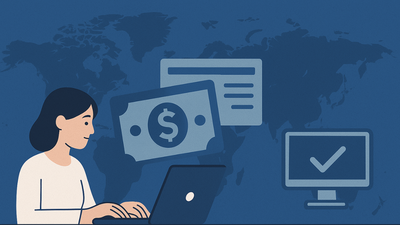
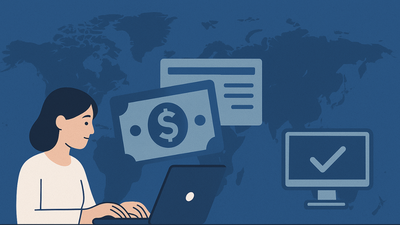
You can be outside the United States and still fully remain an F-1 student. You might fly home for winter break, spend a few weeks away during summer, leave because of a family emergency, or step out for visa stamping. Your SEVIS record continues, your university still considers you enrolled, and nothing in your immigration identity “switches off” simply because you have crossed a border. This is exactly why a question quietly troubles many international students: “If I’m abroad for a short period, can I work for a US employer remotely?” It feels like the perfect loophole — but it isn’t.
Your F-1 status travels with you
Your visa governs your ability to enter the United States. Your F-1 status, however, governs your relationship with the US immigration system more broadly — including how your past activities are judged when you return. So even when you are physically abroad, the US system continues to treat you as an enrolled F-1 student, because:
- Your SEVIS record remains active
- Your I-20 is still valid
- You are expected to resume classes
- You are planning to re-enter on the same F-1 status.
This means your actions abroad can still be scrutinised retroactively the next time you apply for a visa stamp or appear at a port of entry.
Why the rules still matter
Students step out of the US for several normal reasons:
- Academic breaks (winter, spring, summer)
- Family events or emergencies
- Medical situations
- Visa renewal
- Post-semester breathing room before the next academic cycle
- Waiting for
OPT approval and using the interim time to travel
In all these cases, you leave temporarily but remain academically tied to your US institution. You are not “paused” or “inactive”. You are simply off-shore for a short period. This is the part students underestimate: The rules continue to evaluate how you maintained that status.
The incorrect belief: Work abroad is not US work
Students imagine a simple rule: If I am outside American borders, then anything I do is outside US law. But immigration logic is different. It doesn’t care where your laptop is. It cares about:
- Who you are working for
- Whether the role would normally be paid inside the United States
This is why remote work often fails the test. If the employer is a US company, your work is considered US-sourced employment, even if you deliver it from 10,000 kilometres away. If an American college student would be on payroll for the same internship, then you — an F-1 student — need CPT or OPT to do it, regardless of your location.
When work is genuinely safe while abroad
This is the one scenario where the F-1 rulebook genuinely steps aside — yet it is also the most misunderstood.If you are physically outside the United States and working for a non-US employer — a local company, an overseas-headquartered multinational, or a non-profit registered outside the US — then US immigration law simply does not govern that employment. The reason is jurisdictional, not interpretive. US work authorisation rules apply only when labour is performed in the United States or for a US entity in a way that anchors the work to US soil.Many students instinctively assume that an active F-1 status follows them everywhere. It does not. Immigration status regulates presence and activity inside the US, not productive work undertaken abroad for a foreign employer. If you are completing remote work for, say, a London-based NGO, an Indian startup, or a Singapore-headquartered firm while you are physically outside America, you are not triggering CPT, OPT, or on-campus employment provisions at all.What matters, however, is clarity. The employer must be genuinely non-US; payroll, contract, and reporting lines should sit outside the US; and the work should not be a disguised continuation of a US role. When structured cleanly, this route allows students to earn, build skills, and strengthen their CV during breaks or temporary travel — without risking status violations or future visa complications.
Where the real risk lies
The real danger is when you treat your short trip abroad as a convenient loophole to work for US employers, Here are a few examples:
- A remote internship with a US startup
- A design or coding project for a US client
- An unpaid role at a US organisation that benefits the company
- Freelance work for US-based platforms paid as independent contracting
- Content creation tied to US-based revenue streams.
Here, the system’s view is consistent: If the role looks like a job Americans are paid for, it is employment — and requires CPT or OPT, regardless of whether you log in from abroad. Unauthorised work may not show consequences immediately. But it leaves digital footprints and administrative trails: emails, project files, time sheets, tax forms, recommendation letters, LinkedIn activity, and internal HR systems. All of these can surface at visa interviews, OPT adjudications, and port-of-entry inspections.
When you will actually face the consequences
While you are outside the US, nothing visibly happens. The trouble often begins when:
- A visa officer asks, “What did you do during your break?”
- A border officer asks, “Were you employed while you were away?”
- You apply for OPT and the adjudicator reviews your history,
- You seek H-1B or another work visa later.
Any sign of unauthorised employment can be treated as a status violation, even though the work happened abroad.Travel outside the US does not erase F-1 rules. It only places distance between you and the campus, not between you and your status. So, it is risky to work — even briefly, remotely, or unpaid — for a US employer without CPT or OPT. Working abroad for a non-US employer while you are physically outside the United States.