Delhi school admissions 2026–27: How schools calculate distance; a parent’s guide
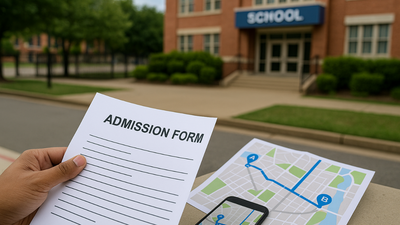
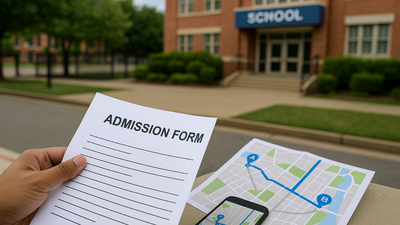
Nursery admission season is here again in Delhi. Parents will have time till 27th December 2025 to submit applications. With just a few hectic weeks to decide where to apply, one factor can quietly make or break your child’s chances: Distance from the school.Under the point-based admission system followed by most private unaided recognised schools, neighbourhood or proximity to school now carries the highest weight, often accounting for 30 to 60 points out of a total 100. In many schools, that single factor outweighs sibling preference, alumni status, or any other criterion. For parents, this makes one thing essential: Understanding how distance is measured.
Why distance matters more than ever
The Directorate of Education (DoE) allows schools to frame their own admission criteria, but within a transparent points-based system. Over the years, proximity has steadily emerged as the dominant filter.The logic schools cite is simple: Younger children should not travel long distances daily, and neighbourhood preference helps reduce transport burden. In practice, however, this means families living a few lanes farther away may lose out — even if everything else is equal.That is why the DoE now mandates that every school publicly upload its admission criteria and point distribution, so parents are not left guessing.
Explained: How schools define distance
Schools do not follow a single rule to define distance. The DoE also does not fix a single distance formula. Schools are allowed to define neighbourhoods as long as the definition is declared upfront. Recent admission criteria show several common patterns:Kilometre-based slabsMany schools divide distance into bands such as:
- 0–3 kilometres
- 3–6 kilometres
- Beyond 6 kilometres
Each band carries different points, with the closest range usually getting the highest score.Broad radius modelsSome schools define neighbourhood as a wider radius:
- Within 0–12 kilometres
- Within 0–15 kilometres
In such cases, most points are concentrated within that radius, while addresses beyond it get sharply fewer or zero points.Steep proximity weightingA few schools heavily favour the closest addresses, assigning very high points to homes within 1 kilometre and dropping scores rapidly beyond that. This effectively turns distance into the gatekeeper.Area or locality mappingInstead of kilometres, some schools list neighbourhoods or colonies. Nearby areas are grouped into higher-point brackets, while farther localities fall into lower categories. The key point for parents: Distance is not just about how far you think your home is — it is about how the school defines and measures it in writing.
Road distance or aerial distance? Read the fine print
Beyond distance bands, there is another detail that often trips parents up: How distance is measured. Some schools explicitly state that distance will be calculated using Google Maps. Others mention aerial (straight-line) distance. A few imply road distance without spelling it out. Increasingly, some schools rely on automated calculation embedded in their online application systems.If the criteria mention Google Maps or automated calculation through the application form, that method will prevail — not personal estimates or alternate routes.Some schools explicitly state that distance will be calculated using Google Maps. Others mention aerial (straight-line) distance. A few imply road distance without spelling it out. Increasingly, some schools rely on automated calculation embedded in their online application systems.
Measuring distance correctly: Step-by-step guide
For most applications, the process is straightforward, but it needs to be done carefully. Following these steps will make the process easy.
- Open Google Maps
- Enter your complete home address
- Enter the school’s official name
- Check the distance shown
If the school specifies:
- Road distance → use the default driving route
- Aerial distance → use “Measure distance” (straight-line option)
- Google Maps / automated → trust the portal’s result, but check it independently once
Do not try multiple routes hoping for a shorter result. Schools will use one standard method.
Match your distance to the school’s slab
Schools award points based on distance slabs, not exact decimals. For example:
- If a slab is “0–3 km” and you are 3.01 km away, you may fall into the next category
- If the slab is “up to 12 km”, any address within that radius is treated equally
Parents often panic over metres. In reality, slab placement matters more than exact distance.
Keep evidence for protection later on
Once you have measured your distance, take a screenshot and note the date. Save or bookmark the school’s admission criteria page as well. If your child is later allotted fewer distance points than expected, these records become your evidence. Distance points are not flexible after submission; they are locked in based on the declared criteria.
Documents that support your distance claim
Most schools accept one or more standard address proofs: Aadhaar cards, ration cards or smart cards, voter IDs, utility bills, or passports of the parent or child. The document itself matters less than three fundamentals:
- The address must be clear and legible
- It must match the address used for distance calculation
- It must fall within the school’s declared neighbourhood zone
A mismatch at this stage is one of the most common reasons parents lose distance points.
Distance points: The rules parents overlook
Many parents still walk into admissions assuming every school measures distance the same way, or discovering the fine print only after forms are filed; some even calculate from landmarks rather than the address on their documents, or lean on an address they cannot officially prove. In a system where proximity carries maximum weight, these are not minor slip-ups but quiet deal-breakers. If you do not know exactly how a school measures distance, you do not really know your child’s admission score. Understanding distance is no longer optional homework; it is the first admission test parents must clear for themselves, and it must be done before choosing schools, not after results disappoint. In Delhi’s current school landscape, geography has quietly become policy — and learning to read that map correctly is the only way to stand anywhere close to equal ground.