JEE Main Session 1 result 2026: As 12 secure 100 percentile, twin brothers from Odisha stand out with identical scores
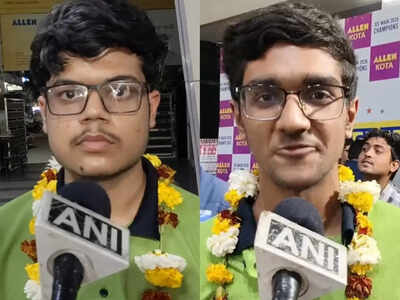
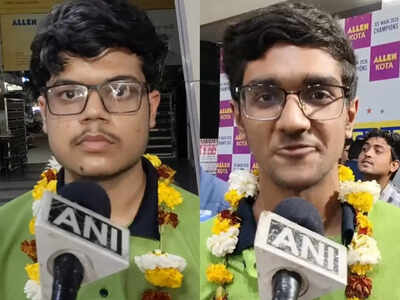
National Testing Agency (NTA) has declared the Joint Entrance Examination Main (JEE Main) Session 1 results 2026, closing the first round of one of India’s largest engineering entrance examinations.This year, 13,55,293 candidates registered for the examination and 13,04,653 appeared, recording an attendance of 96.26%. The exam was conducted in Computer Based Test (CBT) mode across 658 centres in 326 cities, including 15 cities outside India, and in 13 languages including English, Hindi, Tamil, Telugu and others.12 candidates secured a perfect 100 score in Paper 1 for Bachelor of Engineering and Bachelor of Technology. A perfect score positions candidates strongly for top All India Rank and secures eligibility for the JEE Advanced, the gateway to the Indian Institutes of Technology (IIT).Yet within these national numbers, another story has drawn attention. Twin brothers Mahroof Ahmed Khan and Masroor Ahmed Khan from Bhubaneswar, Odisha, secured identical scores in Session 1. In an examination built on ranking and separation, their results were exactly the same.
A shared preparation cycle
The brothers prepared in Kota, Rajasthan, a city that has become central to India’s engineering entrance coaching system. Both describe their preparation as disciplined and structured.Mahroof Ahmed Khan told ANI, “Luckily, there weren’t too many difficulties. It was quite smooth sailing. All the teachers helped a lot. I just did whatever the teachers told me to do, and followed up, did all the work. Nothing else, nothing special.” He added that he has been preparing for the examination for five years and that “a lot of hard work has gone into it, and Kota has definitely helped a lot.”Masroor Ahmed Khan described phases of difficulty. “I had difficulty; sometimes I got low marks because of silly mistakes. I talked to the teacher about it,” he said. He added, “Studying NCERT is good for JEE. I would like to give credit to Allen, my parents, my family, and my hard work as well,” ANI reports.Both brothers said they studied together and maintained similar schedules. Mahroof told ANI, “Since the start, we studied together, clearing doubts together. We used to motivate each other when the results did not go well. This led to healthy competition and improved performance.” Masroor echoed this, telling ANI, “We studied together. We have the same study time. Both of us motivated each other. We learned a lot from each other.”Mahroof also spoke about the family’s role in their preparation. “My mother currently lives with us. She left her job only to come to live with us,” he said. Looking ahead, he added, “I now aim to crack JEE Advanced and then aim to pursue computer science at IIT Bombay. Lastly, I am planning to become an IAS,” ANI reports.
The JEE Main Session 1 result landscape
The exam mirrored social representation across categories:
- General category: 4,52,825 candidates
- General Economically Weaker Sections: 1,60,958
- Other Backward Classes Non Creamy Layer: 5,17,336
- Scheduled Castes: 1,29,902
- Scheduled Tribes: 43,632
The 12 candidates who secured 100 percentile are below:
Of these, 11 candidates are from the General category and one from the Other Backward Classes Non Creamy Layer category.The exam was conducted between January 21 and January 28. Results for Paper 2 covering Bachelor of Architecture and Bachelor of Planning will be declared later. Scorecards are now available on the official website.
Beyond percentile headlines
In an exam where rank determines entry to National Institutes of Technology, Indian Institutes of Information Technology and Government Funded Technical Institutions, the focus naturally shifts to those who secure 100 percentile.However, the identical scores of the brothers offer a parallel reading of this result cycle. JEE is structured around competition, but preparation ecosystems often depend on family decisions, coaching migration and sustained discipline. Kota represents one such ecosystem. Bhubaneswar represents the origin point from which families relocate in search of opportunity.The twins’ statements mirror a pattern seen across India’s entrance culture. Structured coaching, NCERT textbooks, discussion with teachers and peer comparison remain central tools. In this case, the peer was also a sibling.The results will now move towards the next stage, the JEE Advanced. For many candidates, this is another filter. For Mahroof and Masroor Ahmed Khan, it is the next shared milestone.