
Ethanol boom faces reality check as surplus capacity clouds green fuel roadmap
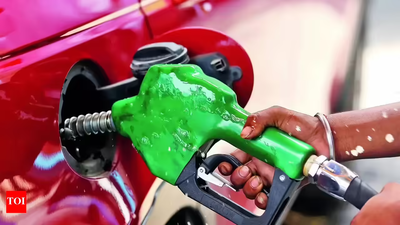
What was once seen as the engine of India’s clean fuel transition is now grappling with oversupply, with ethanol production capacity significantly exceeding current blending needs.Industry estimates show nearly 20 billion litres of installed ethanol capacity, with another 4 billion litres expected shortly, against an annual requirement of about 11 billion litres to meet the current 20% ethanol blending with petrol (E20) target for the ethanol year that began last November, according to an ET report. The mismatch has resulted in more than 50% excess capacity across the sector.The development has raised concerns among policymakers and producers about investment viability and future direction for a programme originally designed to boost farmer incomes, cut crude imports and reduce emissions.Distilleries are currently operating at only 25–30% utilisation, and fresh approvals for new plants have been paused amid uncertainty over demand expansion, industry officials said.
Supply surge hits mills, farmers and investors
The strain from excess capacity is spreading across the value chain, affecting sugar mills, grain processors and farmers who had increasingly depended on ethanol as a stable revenue stream.According to the All India Distillers’ Association (AIDA), ethanol has grown into a Rs 50,000 crore industry following aggressive capacity creation aligned with government blending ambitions. However, slower-than-expected procurement by oil marketing companies has left producers managing underutilised facilities and rising inventories.“Many distilleries were put up, thinking that ethanol consumption would gradually increase,” said Deepak Ballani, director general of the Indian Sugar & Bio Energy Manufacturers Association, quoted ET. “The government needs to step up blending. No fresh permissions are being given to set up distilleries till the government gives clarity.”Plans to move beyond the E20 blending threshold have remained uncertain after public criticism last year over possible vehicle compatibility issues with higher ethanol blends. Though the government rejected the criticism, no new timeline has been announced for raising blending targets.Consumers have also demanded price discounts for ethanol-blended fuel due to its lower energy content — roughly one-third less than petrol — which reduces fuel efficiency by over 3% at a 20% blend. The oil ministry rejected the proposal in August, stating ethanol remains costlier than petrol.During 2024–25, nearly 100 new distilleries commenced operations and several more are being commissioned, but demand growth remains tied to existing policy limits, AIDA said.
Next phase hinges on diesel blending and flex-fuel adoption
With petrol blending appearing to plateau, industry attention is shifting towards ethanol use in diesel — a technically complex and higher-risk avenue.“Unlike petrol, ethanol doesn’t mix with diesel,” said an oil marketing company official requesting anonymity. “Two separate layers are formed. So, one needs a coupler chemical to keep them mixed.”The official said Indian Oil Corporation (IOCL) and Bharat Petroleum Corporation (BPCL) are evaluating ethanol-blended diesel formulations, though issues related to stability, engine compatibility, cold-start performance and long-term durability remain under study.Diesel accounts for a far larger share of India’s fuel consumption, powering freight transport, agriculture and buses, making any transition highly sensitive.Automobile manufacturers, meanwhile, say policy uncertainty beyond E20 is delaying investments in flex-fuel vehicles (FFVs), which can run on higher ethanol blends.“It’s not a constraining factor for OEMs to make flex-fuel vehicles,” a senior car company official told ET, requesting anonymity. “We need clarity and there should be a clear direction.”AIDA has recommended promoting FFVs and lowering GST rates to encourage adoption and expand domestic ethanol consumption. Automakers, however, remain cautious, questioning whether adequate supply and distribution infrastructure would exist for higher blends such as E85 or E100.No major carmaker has yet launched a mass-market flex-fuel vehicle, though prototypes have been showcased. Industry officials indicated that Maruti Suzuki could roll out flex-fuel versions of Wagon R and Fronx models, while Tata Motors, Toyota Kirloskar Motor and Mahindra & Mahindra have displayed flex-fuel prototypes. Queries sent to the companies remained unanswered.Manufacturers argue that fiscal incentives similar to those offered to electric vehicles could accelerate commercial adoption. Flex-fuel compatibility also helps meet tightening Corporate Average Fuel Efficiency (CAFE) norms.Ethanol contains less energy per litre than petrol or diesel, which may marginally reduce fuel efficiency — a factor policymakers are weighing alongside investment risks and consumer acceptance.