
Harvard students struggle with unexpected costs despite expanded financial aid for families earning under $100,000
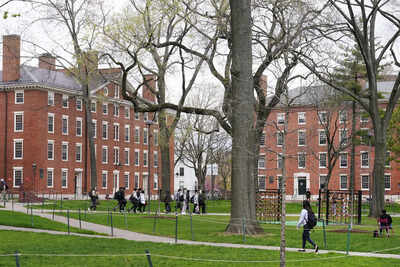
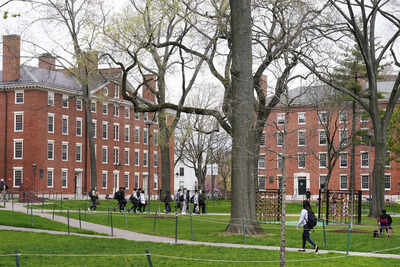
Nearly a year after Harvard College expanded its financial aid program to cover tuition, housing, and food for families earning under $100,000, some students say the policy has left them facing unexpected costs due to vague definitions of “typical assets,” according to a report by The Harvard Crimson.The Crimson spoke to multiple students who earn below the $100,000 threshold but were classified as having “atypical assets,” such as a grandparent’s house, retirement savings, or a family-run small business. These classifications pushed them outside the policy’s protections, forcing many to take out loans or pay additional costs out of pocket.
Aid gaps despite low income
Anmol K. Gerwal ’28, whose family earns “significantly lower” than $100,000 annually, said she expected her expanded financial aid package to cover all costs. Instead, she had to combine loans, family help, and her own savings to make up the difference.“The aid wasn’t fully met, so I had to take out a loan for whatever I was able to get covered, and the rest of it was paid out of pocket and with family help,” Gerwal told The Harvard Crimson. Her parents are paying off her grandparent’s house, which the College counted as an additional asset, affecting her eligibility for full coverage.After appealing her aid package, Gerwal was awarded an additional $5,000 — still insufficient to cover tuition without loans.
Missing out on additional benefits
Other students, like Megha Khemka ’28, reported that falling just short of full aid eligibility also limits access to other opportunities. “There are certain things that you’re only eligible for — in terms of tickets to events or summer funding — if you’re on full aid,” Khemka told The Harvard Crimson. “Since I’m very close to that, but not actually that, there are things that I would like to have access to that I don’t.”Some students reported that the financial aid office cited retirement funds or family Social Security benefits as factors pushing them over the threshold, even when household income was below $100,000. Others mentioned that assets tied to family-run small businesses disqualified them from full aid.
Harvard’s position
Harvard’s financial aid website states that the College does not “typically” factor home equity or retirement savings into aid calculations and that students will “never be required to take on loans.”In a statement, James M. Chisholm, spokesperson for the Faculty of Arts and Sciences, said, “Harvard College’s financial aid program works exactly as stated,” noting that the College will spend nearly $300 million on undergraduate financial aid this year, with a majority of students receiving some form of support. However, he did not comment on how the College determines which assets are considered typical or atypical.
Expanded policy and student concerns
The expanded policy, announced in March last year and effective from fall 2025, also promised free tuition for families earning up to $200,000, with additional aid tailored to individual circumstances. Yet, some students report facing gaps in coverage despite not having assets they believed would be classified as atypical.Adedoyin O. Adebayo ’26 said she does not believe her family has atypical assets but still does not receive full tuition coverage. “I remember reading about the policy, but for my account, I did not get everything completely free, so I don’t think it’s reflected,” she told The Harvard Crimson.Students like Gerwal express frustration that being just a few thousand dollars short of full aid eligibility can prevent them from accessing grants and programs intended for students on full aid. “I just think it’s kind of insane that a student could be a couple thousand off, and then suddenly they’re not eligible for the coat fund, the junior startup grant,” she said.