
Perfect storm: Tech glitch, crew crunch cripple airports; over 200 flights cancelled | India News
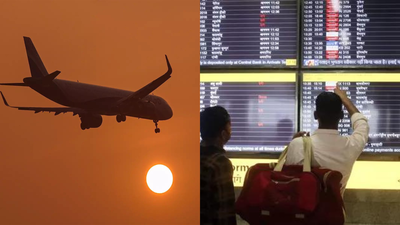
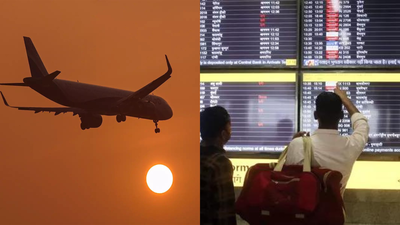
NEW DELHI: Air travel across India was hit by widespread disruptions on Tuesday night and Wednesday, as IndiGo grappled with a sharp crew shortage, Air India dealt with a third-party system failure, and multiple airports reported check-in outages that forced carriers into manual processing with over 200 flights affected. December opened with hundreds of delays and cancellations across the network, triggering long queues, diversions and advisories from airlines and airports.IndiGo cancelled more than 100 flights on Wednesday and reported delays across major hubs such as Bengaluru, Mumbai and Delhi. Sources said the country’s largest airline is facing an acute crew shortage following the rollout of the second phase of the new flight duty time limitation norms, which came into effect on 1 November.Also read: Glitch hits airports again: Check-ins affected; Air India asks flyers to check statusIndiGo – which flies almost two out of three domestic passengers – is witnessing massive flight delays and some cancellations. Govt data shows only 35% IndiGo flights (the airline operates over 2,200 daily) operated on time Tuesday (Dec 2). And on Wednesday, multiple airports including Delhi, Mumbai, Hyderabad, Bengaluru reported almost 200 flight cancellations till the afternoon.A source told PTI, “IndiGo has been facing acute crew shortage since the implementation of the second phase of the FDTL norms, leading to cancellations and huge delays in its operations across the airports.” The situation, the source said, worsened mid-week as scores of aircraft were delayed or grounded.Also read: Massive delays: IndiGo flight punctuality crashes to 35%; some cancellations too due to crew shortageIndiGo confirmed the disruption, saying, “We have had several unavoidable flight delays and some cancellations in the past few days due to various reasons including technology issues, airport congestion, and operational requirements.”
IndiGo’s delays deepen; on-time performance drops
On Wednesday, IndiGo’s on-time performance at six key domestic airports plunged to just 35 per cent, far below Air India’s 67.2 per cent, Air India Express’s 79.5 per cent, SpiceJet’s 82.50 per cent and Akasa Air’s 73.20 per cent, according to the Civil Aviation Ministry website.The FDTL norms that airlines had initially opposed include extended weekly rest periods of 48 hours, expanded night-time definitions, and a cap of two night landings. While the first phase took effect in July, the more restrictive second phase began in November after a Delhi High Court directive.IndiGo currently operates about 2,100 flights daily. As of 2 December, it had 416 aircraft in its fleet, with 366 in operation and 50 on the ground, according to Planespotter data.An ANI statement from the airline added, “Our teams are working diligently to ensure that operations normalise as soon as possible. Furthermore, we are offering alternate flight options or refunds to affected customer, as applicable. We regret the inconvenience caused to our valued customers due to these disruptions.”
Hyderabad, Vadodara and other airports see cascading issues
Operational issues were also reported from Hyderabad’s Rajiv Gandhi International Airport, where low visibility on Tuesday led to diversions and overnight delays.Two flights were diverted: flight XY325 from Riyadh to Mumbai and IndiGo’s 6E 352 from Pune to Bengaluru. Multiple departures, including 6E 409 (Hyderabad–Visakhapatnam), 6E 785 (Hyderabad–Mumbai), 6E 944 (Hyderabad–Kolkata), 6E 2256 (Hyderabad–Delhi) and 6E 5003 (Hyderabad–Mumbai), were also delayed.At Vadodara airport, two IndiGo flights on the Mumbai–Vadodara–Mumbai and Delhi–Vadodara–Delhi sectors were cancelled due to operational reasons. Authorities said passengers were shifted to alternate flights or offered full refunds. The cancellations follow a series of technical snags reported over the past week on the Vadodara–Goa, Vadodara–Hyderabad and Mumbai–Vadodara routes.Engineers were flown in from Mumbai after a technical issue forced an IndiGo aircraft to return to the bay during taxiing last week.
Major check-in outage hits multiple airports; Air India cites third-party system glitch
A parallel systems breakdown on Tuesday also impacted travel from airports. Check-in systems of IndiGo, Air India and several other airlines reportedly failed across airports after a third-party operational system went down.At Varanasi airport, announcements blamed the outage on Microsoft, telling passengers that “Microsoft Windows reports major service outages globally. IT services/ check in systems at airports are impacted.” Microsoft’s status page, however, showed “All products are operational.”Air India earlier issued an advisory urging passengers to check flight status before leaving home. It said, “A third-party system disruption has been affecting check-in systems at various airports, resulting in delays across multiple airlines, including Air India. Our airport teams are working diligently to ensure a smooth check-in experience for all passengers.”An hour later, the airline confirmed restoration. “The third-party system has been fully restored, and check-in at all airports is functioning normally. All our flights are operating as per schedule.”Delhi Airport also acknowledged “operational challenges” faced by domestic carriers and advised passengers to check with their respective airlines.
Recent tech troubles add to passenger frustration
The latest outage comes weeks after a major technical glitch at Delhi Airport’s air traffic control on 7 November slowed flight movements and caused over 150 delays by 9 am. A malfunction in the Aeronautical Message Switching System forced controllers to manually process flight data.During that disruption, airlines such as SpiceJet, IndiGo and Air India had issued advisories about long wait times and delays.With December beginning with multiple layers of operational stress, airlines have advised passengers to monitor flight alerts closely, expect delays and plan airport arrivals with additional time until operations stabilise.