Geminids meteor shower 2025: When and where to watch the spectacular December nights with up to 120 shooting stars per hour |

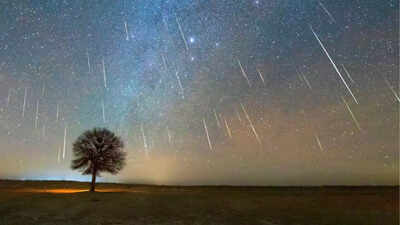
The Geminids meteor shower is widely regarded as one of the brightest and most dependable annual celestial events. Every December, it transforms the night sky into a spectacular display of streaking lights, captivating stargazers around the world. In 2025, viewing conditions are especially favourable, with minimal moonlight during the peak nights, ensuring darker skies and optimal visibility. This meteor shower is renowned for its consistency, often producing dozens of meteors per hour, making it a must-see event for both amateur and experienced astronomers. With its dazzling performance, the Geminids offer a rare opportunity to witness the beauty of our universe in action, creating unforgettable memories under a glittering canopy of shooting stars.
Geminids meteor shower: When and where to witness 2025 spectacle
The peak of the Geminids meteor shower occurs on the nights of 13 December and 14 December 2025. This year, the timing is ideal for observers because the last quarter moon falls on 11 December. By the time the Geminids reach their peak, the moon will be a waning crescent, meaning there will be minimal moonlight to interfere with the visibility of the meteors.During these peak nights, observers in dark locations can expect to see between 60 and 120 meteors per hour. The meteor activity is generally consistent, so even casual viewers have a good chance of witnessing multiple shooting stars in a single hour.
Where to see the Geminids meteor shower
The Geminids are most prominent in the Northern Hemisphere but are also visible from the Southern Hemisphere. The meteors appear to radiate from the Gemini constellation, which makes locating them easier for stargazers.To find the radiant point of the Geminids:
- Look northeast of the Orion constellation, which is easily recognisable.
- Locate the Gemini constellation, positioned between Taurus and Cancer.
- Focus on Castor and Pollux, the two brightest stars in Gemini, which represent the heads of the celestial twins.
The radiant rises in the mid-evening hours, making it possible to view meteors from dusk until dawn on 13 and 14 December.
Key tips for maximising your viewing experience
To enjoy the Geminids meteor shower to its fullest, follow these expert tips:
- Choose a dark location: Avoid city lights and find a secluded spot with a clear view of the sky.
- No equipment needed: While telescopes and binoculars are useful for planets and deep-sky objects, meteor showers are best viewed with the naked eye to capture as much of the sky as possible.
- Allow your eyes to adjust: Spend at least 30 minutes in darkness so your eyes can adapt fully, improving your ability to see faint meteors.
- Protect your night vision: Avoid using bright lights or checking your phone. If light is necessary, use a red-filtered flashlight, which minimally disrupts night-adapted vision.
Understanding the science behind the Geminids
What makes the Geminids meteor shower unique is its origin. Most meteor showers are caused by debris from icy comets, but the Geminids originate from an asteroid. The parent body, 3200 Phaethon, is an unusual blue space rock that exhibits comet-like behaviour. Every 1.4 years, Phaethon sheds a stream of particles as it orbits the Sun.Scientists believe that Phaethon may have suffered a major collision in the distant past, which created a vast trail of cosmic dust. When Earth passes through this debris field, these particles sometimes called “asteroid crumbs” enter the atmosphere at high speed. The friction with the atmosphere causes them to heat up and burn brightly, producing the streaks of light that we call meteors.
Historical significance of the Geminids meteor shower
The Geminids have a long and fascinating history that spans nearly two centuries. The first recorded observation of this meteor shower was made in 1833 from a riverboat on the Mississippi River. Over time, the Geminids became renowned for their consistency and intensity. Unlike other meteor showers that may vary in visibility year to year, the Geminids are known to produce a high number of meteors per hour, making them a favourite among amateur and professional astronomers alike.This historical reliability has also made the Geminids a subject of scientific study, helping researchers understand the nature of meteor showers, their parent bodies, and the composition of the cosmic debris that causes these spectacular light shows.