Higher Education Commission of India (HECI) bill faces heat as CPI(M) MP warns of opaque drafting and threat to autonomy
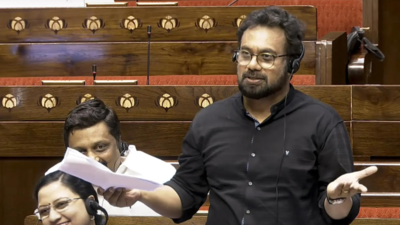
A major confrontation is brewing over the Centre’s plan to introduce the Higher Education Commission of India (HECI) Bill during the ongoing session of Parliament. CPI(M) MP John Brittas has formally urged Union Ministers Kiren Rijiju and Dharmendra Pradhan to pause the legislative push, warning that the government is attempting to advance a sweeping regulatory overhaul without transparency.According to the PTI report, Brittas wrote to the ministers, flagging that the draft bill has not been released in the public domain and that no consultations have taken place with state governments, universities, teachers’ bodies, or students. He stressed that pushing the bill forward without scrutiny would violate democratic norms and expose the higher-education sector to “far-reaching consequences.”
Opaque process at the heart of criticism
The MP’s letter, as reported by the PTI, warns that the government’s approach raises fundamental questions about accountability and the bypassing of federal principles. Brittas urged the Centre to either withhold the bill or refer it to a Joint Parliamentary Committee to ensure a full examination of its provisions.
Bill aims to reshape regulatory governance
The proposed HECI framework seeks to consolidate multiple existing regulators, including the University Grants Commission and bodies overseeing technical and teacher education, into a single apex authority. While the Centre argues the move aligns with the National Education Policy 2020, critics fear the consolidation will centralise decision-making and weaken the autonomy of institutions that currently operate under diverse governance structures.
Autonomy, federalism and public funding in the spotlight
As detailed in the PTI report, Brittas cautioned that the Bill could erode academic independence and potentially shift public institutions toward models dependent on centralised control. He argued that such a transformation demands broad consultation, especially given its potential to reshape funding, accreditation and institutional freedoms.
Resistance likely to escalate
With the Bill listed for introduction this session, political and academic pushback is expected to intensify. Opposition parties, university groups and teacher unions have already flagged concerns about the Centre’s opaque approach and the risks posed to India’s federal higher-education framework.
Government response awaited
The Education Ministry has not issued any public clarification so far. If the Bill is introduced without releasing the draft for scrutiny, the government may face significant resistance on the floor of Parliament—setting the stage for a high-stakes confrontation over control, autonomy and the future structure of Indian higher education.(With inputs from PTI)