
This NASA supercomputer compresses 500 years of computing into a single day to power Moon and Mars missions |
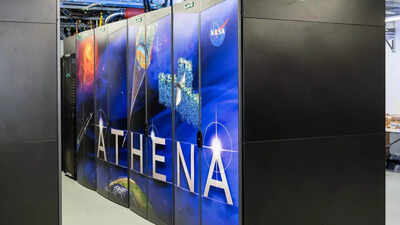
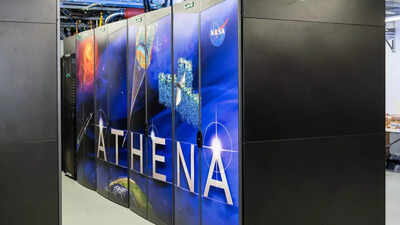
For most people, a powerful computer means faster loading times or smoother video edits. For NASA, it means compressing centuries of work into a single day. That’s the promise behind Athena, the agency’s newest and most powerful supercomputer, unveiled in January 2026. Sitting quietly at the Ames Research Center in California, Athena doesn’t look dramatic. No flashing lights. No sci-fi glow. Just rows of hardware humming away. And yet, experts say it can perform in 24 hours what an average home PC would need roughly 500 years to complete. That gap alone hints at why Athena matters when space missions are getting harder, data iis exploding, and ofcource guesswork is no longer an option.
NASA’s Athena supercomputer sets a new benchmark in speed and performance
Athena delivers more than 20 petaflops of peak performance. That figure sounds abstract, but it isn’t. One petaflop means a quadrillion calculations every second. Athena does that twenty times over. This puts it well ahead of NASA’s older systems, including Pleiades and Aitken, which have served the agency for years. Those machines were powerful in their time. The system lives inside NASA’s Modular Supercomputing Facility, a space designed for flexibility. Racks can be upgraded. Components swapped. Cooling was adjusted without tearing the building apart. That matters more than it sounds. Supercomputers age fast. Athena is built to evolve instead of being replaced.NASA officials say this approach keeps costs down and capability high. It also means fewer interruptions.
NASA’s Athena supercomputer balances power and efficiency
Athena was designed to deliver extreme performance without extreme energy waste. The modular setup allows better airflow and cooling, which reportedly cuts utility demand significantly compared to older facilities. If power bills spiral, research slows. Athena avoids that trap. It seems to strike a balance between raw power and sustainability, something agencies can’t ignore anymore. There’s also a quieter benefit, less heat, less stress on hardware, longer operational life, not flashy, but crucial.
How Athena is reshaping rocket simulations and AI research
Athena isn’t just crunching numbers for the sake of it. It’s being used to simulate rocket launches with remarkable precision. Engineers can now run thousands of “what if” scenarios before metal is even cut. AI is another major focus. NASA is training large-scale models on Athena to analyse massive datasets from Earth observation, climate systems, and aeronautics research.
How Athena reduces risk in mission planning and navigation
Lunar landers, Mars entry systems and trajectory planning for deep-space probes. All of it relies on computation. Tiny miscalculations can mean mission failure.Tracking asteroid paths is another task. The calculations involved are immense and continuous. Small changes matter. Athena can process those updates quickly, helping NASA refine impact predictions. The system is managed by NASA’s Office of the Chief Science Data Officer and fits into a broader hybrid strategy.