

Brittle nails to premature ageing: 5 warning signs your body is struggling |
Your body is more marvellous than any supercomputer. The infinite things it does are still beyond what humans can fully comprehend. It constantly communicates its needs through subtle signals and symptoms. If your body has been acting ‘a little off’ lately, it might be trying to tell you something important. However, most of us tend to ignore these distress signs. Learning to recognise these warning signs could be transformative for your health. In a video shared on Instagram, Dr Saurabh Sethi, a California-based gastroenterologist trained at Harvard and Stanford, has shared five critical indicators that your body may be desperately signalling nutritional deficiencies. What are they? Let’s take a look.
Brittle nails
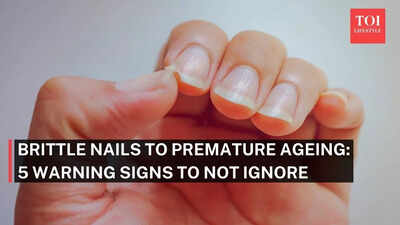
Ever noticed brittle nails? When your nails become weak, thin and prone to breaking, your body is essentially waving a red flag. This is more than a cosmetic concern. Dr Sethi explains that brittle nails indicate insufficient protein and iron in your diet. Your nails, like hair and skin, heavily rely on protein intake for strength and structure. Similarly, iron deficiency accelerates this problem by compromising oxygen delivery to nail cells. So, if you notice your nails becoming increasingly fragile, it’s time to look at your protein sources and consider an iron-rich diet.
Twitching of eyelids or limbs
One warning sign that most people tend to ignore is twitching in the eyelids. Most people attribute it to tiredness, but the gastroenterologist says there could be more. “Twitching in the eyelids or the limbs indicates magnesium deficiency, which is critical for transmitting nerve impulses,” he said. According to a study published in the National Library of Medicine, hypomagnesaemia — a low level of magnesium in the blood — could lead to twitching of the facial muscles and spasms in the legs. This is because magnesium regulates muscle contractions and nervous-system function. When the levels drop, your body misfires. The NHS notes that twitching is a warning symptom of magnesium deficiency. So, it’s time to add magnesium-rich dark chocolate, pumpkin seeds, almonds and leafy greens to your diet.
Joint clicking sounds
Do you hear clicks or pops when you move your joints? This might indicate more than just age. “It could be a warning sign of vitamin D3 or calcium deficiency,” he said. These nutrients are essential for maintaining bone density and cartilage health. When levels of calcium and vitamin D3 go down, your skeletal system weakens, leading to noises and potential joint deterioration.
Premature greying
Another common concern people have these days is premature greying. Instead of rushing to dye your hair, it is important to look at its cause. “This could indicate a deficiency of vitamin B12, which is crucial for RBC production and oxygen transport at the hair follicles,” the doctor said. A 1986 study published in Arch Dermatology reported a case of reversible generalised hyperpigmentation of the skin and nails, along with reversible premature greying of the hair, all linked to vitamin B12 deficiency. Dr Sethi added that copper deficiency could also lead to premature greying, as the nutrient “is responsible for melanin production, imparting colour to your hair.”
Easy bruising
If you’re developing bruises from minor bumps or seemingly nothing at all, it is time to load up on vitamin C. “Easy bruising could mean that you’re running short of vitamin C, which is responsible for collagen formation. It could also mean a deficiency of vitamin K1, which helps in blood clotting,” the doctor said. According to the NHS, citrus fruit such as oranges and orange juice, peppers, strawberries, blackcurrants, broccoli, Brussels sprouts and potatoes are good sources of vitamin C. The foundation of lasting wellness is simple — listen to your body. When you notice such signals, it’s crucial to address them rather than brush them aside. Nutrient deficiencies can lead to serious health concerns, and so timely intervention is crucial.Note: The information provided in this article is for educational purposes only and is not intended as medical advice. Always consult a qualified healthcare professional before starting any new medication or treatment, or before changing your diet or supplement regimen.