Could humans one day hibernate like bears? Scientists are now taking it seriously |
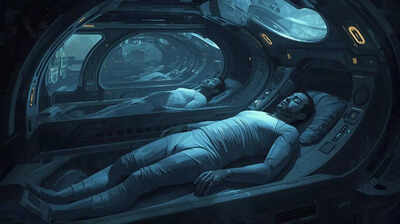
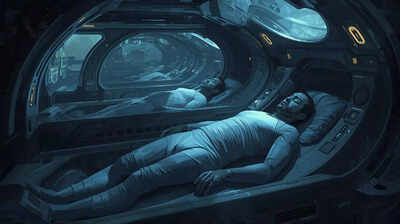
For a long time, the idea of human hibernation sat firmly in the realm of fiction. That position is beginning to shift. Scientists studying sleep, metabolism and brain protection are now asking whether humans could enter a controlled state similar to animal torpor. The question has gained urgency as space agencies consider longer missions that would strain both bodies and resources. Medical research has also added weight to the discussion, as doctors already suppress metabolism in certain clinical settings. None of this amounts to true hibernation. But it suggests that the human body may not be as biologically resistant as once assumed. Researchers emphasise that no safe method exists today. Still, the evidence has reached a point where the idea can no longer be dismissed outright.
The science behind human hibernation is advancing faster than expected
Torpor is a regulated biological state, not a passive shutdown. Metabolism slows sharply. Heart rate and breathing drop. Body temperature falls, sometimes by many degrees. Energy use shifts to fat stores. The entire system runs at a lower setting.Animals use torpor in different ways. Some species, including mice and birds, enter it for a few hours at a time. Others remain in it for months during winter. Bears are a familiar example, though their body temperature does not fall as dramatically as in smaller mammals. Importantly, hibernation is not limited to small animals. Even primates such as the fat-tailed dwarf lemur are capable of it, showing that size and brain complexity are not absolute barriers.
Why space agencies are paying attention
Interest in human torpor has grown alongside plans for deep space travel. A mission to Mars would take roughly eight months one way. Journeys beyond that would last years. Keeping astronauts awake, fed and psychologically stable for that duration is a serious challenge.If humans could enter a state of long-term torpor, resource use would drop. Food and oxygen needs would fall. Time would pass more quickly for the crew. While this would not solve every problem, such as radiation exposure, it could reduce many risks. These possibilities have led organisations such as the European Space Agency to support research into human stasis.
Medicines already shows it may be possible
Doctors already lower body temperature and metabolism in hospitals. Controlled hypothermia is used during cardiac surgery and after strokes or cardiac arrest. By reducing metabolic demand, cells can survive longer with less oxygen.These practices resemble aspects of torpor. Heart rate slows. Breathing becomes shallow. Energy use drops. The key difference is that humans do not enter this state naturally. It requires drugs, machines and close supervision. The body actively resists cooling through normal temperature regulation, which must be overridden.
Why triggering torpor remains unsolved
One of the biggest unknowns is how animals torpor. Scientists are unsure whether it starts at the cellular level or is commanded by the brain through hormones and neural signals. It may involve both.Without understanding this trigger, attempts to copy torpor remain crude. Lowering temperature alone does not recreate the full biological state. Animals appear to know how to enter and exit torpor safely. Humans do not.
The brain as the main obstacle
The brain presents the greatest challenge. It is highly sensitive to oxygen loss and nutrient reduction. Animals protect their brains during torpor, but the mechanisms are still unclear.Hibernating animals also wake periodically. They often sleep deeply before returning to torpor. This suggests torpor disrupts normal sleep processes. Brain activity during recovery resembles that seen after sleep deprivation.There is also the question of memory. Studies in bats show that most memories survive long periods of torpor, though some are better preserved than others. For humans, any risk to memory or cognition would be unacceptable, particularly for astronauts or patients.
Where research is heading
Current research focuses on sleep circuits, metabolic control and molecular pathways linked to torpor. New genetic and pharmacological tools have made it easier to study these systems. Progress is steady but cautious.Scientists stress that even if human torpor becomes possible, it would likely begin with short, tightly controlled periods. Long term hibernation remains distant. For now, the idea sits between proven medical practice and future ambition.This article is based largely on the work and analysis of Vladyslav Vyazovskiy, Associate professor of neuroscience at the University of Oxford.