
Europe and Africa are slowly spinning out of place, scientists discover |
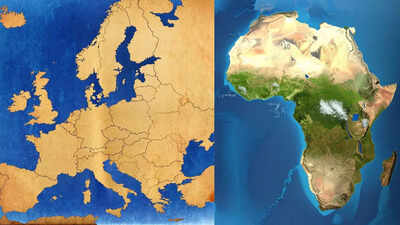
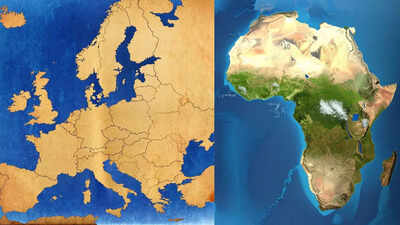
The Iberian Peninsula sits where Europe and Africa lean into each other, a place long known for pressure and friction in the crust. New research suggests something subtler is also happening. Parts of Iberia appear to be rotating very slowly, almost imperceptibly, under the weight of larger tectonic forces. The motion is not something that can be felt or seen on the surface. It shows up instead in dense measurements taken from earthquakes and satellite tracking stations. These signals do not point to sudden change or dramatic movement. They hint at a gradual adjustment playing out over millions of years, shaped by the way stress is passed through old crust, thinned margins, and curved mountain belts at the edge of two major plates.
Researchers have detected a slow spin beneath Europe and Africa
The research “New insights on active geodynamics of Iberia and Northwestern Africa from seismic stress and geodetic strain-rate fields” combined earthquake focal mechanism data with updated satellite measurements from GNSS stations across Iberia and North Africa. This pairing allowed them to compare stress released during earthquakes with slower surface movements measured in millimetres per year. The result is a much finer picture of how different crustal blocks behave. Some areas absorb stress quietly. Others release it in short bursts. Together, the patterns suggest Iberia is not fully locked in place relative to Eurasia. Instead, it shows a weak clockwise rotational signal, most visible toward the south and west.
The plate boundary matters here
Iberia lies along a diffuse boundary where the African and Eurasian plates converge at an angle. That convergence is not neat or direct. In the Atlantic sector, stress seems to pass more cleanly between the plates. Farther east, near Gibraltar and the Alboran Sea, the crust is thinner and more complex. There, stress is bent, delayed, or redirected. This uneven transfer appears to create conditions where slow rotation becomes possible, rather than simple compression alone.
Is Iberia moving as one solid block
The data do not suggest a single rigid slab turning uniformly. Instead, different regions respond in different ways. Southern Iberia shows clearer rotational strain, while much of the interior remains comparatively quiet. Northern areas appear more stable when measured against Eurasia. This patchwork behaviour reflects Iberia’s long geological history, shaped by rifting, collision, and later reactivation of old faults. Rotation, in this sense, is uneven and partial rather than complete.
Satellites reveal about present motion
GNSS stations show that most of Iberia moves very slowly relative to Eurasia, often less than a millimetre per year. Even so, direction matters as much as speed. Motion vectors shift from southwest to west-northwest as you move across the peninsula. These small directional changes are consistent with a mild clockwise rotation rather than straight line movement. Along the Gibraltar Arc, the signals are stronger, suggesting that curved mountain belts play a role in guiding motion.
How stress and strain do not always line up
In an ideal material, stress and strain point the same way. Earth’s crust rarely behaves that cleanly. In Iberia, stress inferred from earthquakes and strain measured at the surface often sit at slight angles to each other. This mismatch is especially clear near plate boundaries and in zones with mixed continental and oceanic crust. Such oblique relationships support the idea that rotation can emerge naturally in a complex system, without requiring a single driving fault or hinge.
Does this mean higher earthquake risk
The study does not point to new or immediate seismic danger. Much of the rotation occurs in regions with low strain rates, where movement is spread out over time. Still, it reinforces the idea that tectonic activity continues even in areas considered stable. Intraplate regions show signs of ongoing stress influenced by distant plate interactions. These processes tend to be quiet and slow, but they are not absent.
Geologists are paying attention now
What stands out is not the speed of movement but the clarity of the signal. By combining dense earthquake data with modern satellite networks, researchers can resolve patterns that were previously blurred. Iberia becomes a useful case study for how continents adjust internally when caught between larger plates. The rotation is slight, almost easy to overlook. It is there mostly in the numbers, ticking along, without asking for much notice.