
February’s full Snow Moon to appear this weekend: Check date and time to see the last full moon of winter |

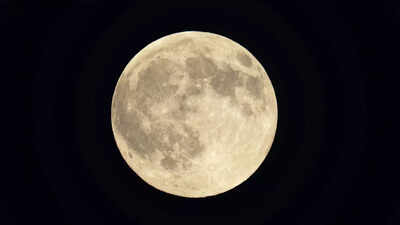
A full moon arrives at the start of February, settling into the evening sky with little fuss but quiet interest. The event itself is familiar, yet this one carries a detail that does not come around often. Alongside the bright moon, nearby stars and clusters briefly share the same patch of sky. For observers across much of the world, the timing places the moon high and clear during evening hours. It rises as daylight fades, hangs overhead late into the night, and drifts west before morning. Nothing dramatic needs to happen for it to be worth looking at. The conditions are enough on their own, steady and visible to anyone who steps outside and looks up.
Snow moon to appear alongside Regulus on February 1
According to EarthSky the crest of the full moon occurs at 22:09 UTC on February 1. In central North America, this lands near sunset, which makes the moonrise more noticeable. As the sun drops below the horizon, the moon lifts into view in the east. This timing creates a slow handover between daylight and moonlight. For many people, this is when the moon appears largest and most striking.According to Indian Standard Time, the snow moon will be visible at its peak in India on 2 February at 03:39 am and will be visible in the whole country, provided skies are clear.
Snow Moon name reflects seasonal history
February’s full moon is widely known as the Snow Moon. The name comes from seasonal conditions rather than astronomy. In parts of North America, February was often the snowiest month, when travel and food supplies were limited. Other traditional names exist, including Hunger Moon and Boney Moon, but Snow Moon remains the most commonly used. The name does not change the moon itself. It simply reflects how people once marked time by weather and survival.
Regulus appears close to the February full moon
This full moon sits near Regulus, the brightest star in the constellation Leo. In the Western Hemisphere, Regulus rises about ninety minutes after the moon. The star can be difficult to spot because of the moon’s brightness. Blocking the moon with a hand or a nearby object can help. The pairing is temporary, changing as the moon continues its orbit night by night.
Beehive Cluster adds a quieter background detail
The moon also passes near the Beehive Cluster, a group of stars usually seen with binoculars. The moonlight washes much of it out, but its position is still of interest to skywatchers. This close arrangement of familiar objects does not repeat often. The sky shifts on, quietly, once the night passes.