
Harvard to introduce Urban Studies track for undergraduates: Students to explore urbanisation, culture, and global systems
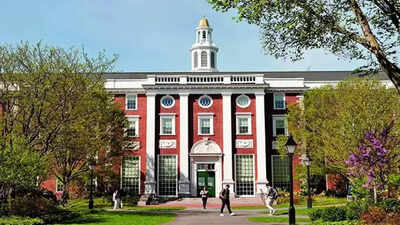
Harvard University will introduce a new “Urban Studies” track within its History and Literature concentration beginning next academic year, according to a report by The Harvard Crimson. The initiative marks the first time the College has formally structured an undergraduate pathway dedicated specifically to the academic study of cities.The new track is designed to help students examine the “processes of urbanization and the urban experience,” allowing them to analyse cities from local neighbourhood dynamics to global systems. The program aims to provide a coherent academic structure for students who previously had to assemble city-focused coursework from multiple departments without a unified framework.
Course requirements and academic structure
Students who opt for the Urban Studies track will be required to complete a defined set of courses. These include a core urban studies course, one course focused on cities before 1900, one covering the period between 1900 and 2000, and a quantitative reasoning course connected to the field. The structure reflects an effort to combine historical analysis, literary interpretation, and data-driven inquiry within a single academic pathway.A number of interdisciplinary courses will count toward the track. Among them are English 184CF: “City Fictions,” taught by Professor Tara K. Menon, and Economics 50: “Using Big Data to Solve Economic and Social Problems,” taught by economists Raj Chetty and Gregory A. Bruich. By drawing from departments such as English and Economics, the track underscores the interdisciplinary character of urban studies.History and Literature Chair Bruno Carvalho will teach a new core course, Hist-Lit 10: “The Culture of Cities,” beginning in fall 2027. He is also scheduled to offer Hist-Lit 90HN: “Soccer, Globalization, and Urban Life” in fall 2026, expanding on a first-year seminar he previously taught.
Years of advocacy and institutional debate
The launch follows years of advocacy from students and faculty who argued that Harvard lagged behind peer institutions in formalizing urban studies. According to The Harvard Crimson, supporters of the program maintained that students interested in urban issues were forced to navigate scattered course offerings without a centralized academic home.Lecturer Chloe I. Hawkey told the publication that establishing a formal path in urban studies was overdue, noting that interdisciplinary urban studies majors or concentrations are common at other universities.Carvalho, who has pushed for a secondary field in urban studies since arriving at Harvard in 2019, said understanding cities is essential in a world where the majority of people now live in urban areas. Before joining Harvard, he served as co-director of the Princeton-Mellon Initiative in Architecture, Urbanism and the Humanities and was affiliated with the Urban Studies Program at Princeton University.He emphasized that the History and Literature Department’s approach differs from some standalone urban studies programs. Instead of operating as a separate territorial unit, the department integrates disciplines by design, bringing history and literature into dialogue. Faculty members argue that this integrated framework mirrors the nature of cities themselves, which bring together diverse ideas, people, and resources.
Student response and future outlook
Students have welcomed the new track. Clyve Lawrence ’28, co-president of the Harvard Undergraduate Urban Sustainability Lab, described the initiative as a positive step toward closing a longstanding gap in the College’s academic offerings related to urban studies.Kayla P.S. Springer ’26, a former co-president of the same organization, said the track could help consolidate existing coursework and provide clearer direction for students interested in urban issues. She noted that while classes addressing urban themes already exist across departments, there had been no unified course load guiding students through the field.Faculty members say the new track reflects both growing student demand and the department’s broader interdisciplinary mission. Dennis M. Hogan, a lecturer in History and Literature, told The Harvard Crimson that the department trains students to approach subjects from multiple perspectives — an approach well suited to the study of cities.The Urban Studies track is expected to formalize what had long been an informal area of interest at Harvard, giving students a clearer academic pathway to examine the social, cultural, historical, and economic dimensions of urban life.