
How a bird’s feathers helped scientists create the world’s darkest fabric |
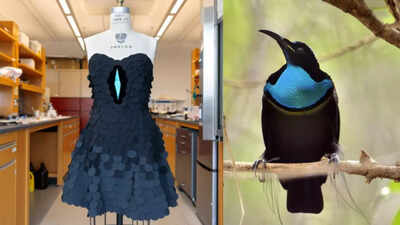
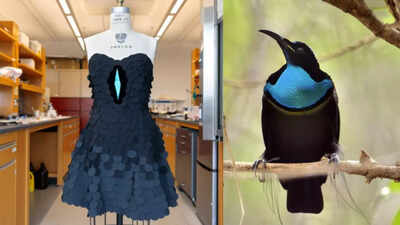
A new textile inspired by one of nature’s most visually striking birds is reshaping how scientists and designers think about colour, light and material engineering. Researchers at Cornell University have created what is currently recognised as the darkest fabric ever developed, a textile that absorbs almost all visible light and retains its depth of colour from every angle. The achievement arrives at a moment when industries increasingly value materials that control light with precision, whether for imaging technologies, solar energy collection or high-impact visual design. By drawing on biological structures found in the plumage of a bird-of-paradise species, the team has demonstrated how natural systems can guide the next generation of energy-efficient and visually powerful textiles, all within a flexible and wearable form.
What the scientists drew inspiration to invent the darkest fabric ever made
The scientific team based its approach on the magnificent riflebird, a member of the bird-of-paradise family known for plumage that appears almost impossibly dark in its natural habitat. Unlike surfaces that rely solely on pigment, the riflebird’s feathers generate profound blackness through microscopic architecture. The feathers contain densely layered barbules that trap incoming light through repeated internal scattering, leaving almost no visible reflection. This structural absorption is what allows the bird’s body to serve as a strikingly dark backdrop against the vivid blue patches used in its courtship displays. Researchers studying the feather architecture identified the key features responsible for this optical effect and used those observations as a template for constructing a textile analogue. The resulting work, detailed in a study released by Cornell University, demonstrates how careful replication of this biological structure can produce a fabric that behaves similarly in laboratory measurements of reflectance.
How scientists constructed a textile that absorbs nearly all visible light
To recreate the riflebird’s ultrablack effect, the research team began with a simple merino wool knit, selected for its fibre structure and compatibility with modification. The wool was first dyed with polydopamine, a synthetic analogue of melanin that penetrates the fibres and enhances light absorption across the visible spectrum. This stage ensured that the fabric was dark at its core, not just coated at the surface. The next phase involved plasma etching, a process that gently strips away microscopic amounts of material to create densely packed nanofibrils on the surface of each fibre. These nanoscale protrusions behave much like the barbules on the riflebird’s feathers, forming an intricate landscape that disrupts and captures light. When measured, the resulting textile exhibited an average total reflectance of 0.13 per cent, well below the threshold typically used to qualify a material as ultrablack. Importantly, this light-absorbing capacity remained consistent even when the fabric was viewed from angles up to 60 degrees from centre, a property that sets it apart from many previous engineered ultrablack materials.
What sets this flexible ultrablack fabric apart from rigid black materials?
The new fabric stands out not only for its optical performance but also for its practicality. Many existing ultrablack materials, including those constructed from carbon nanotubes, are fragile or rigid, which limits their use outside controlled environments. They are difficult to apply to garments, curved surfaces or high-movement settings, and often require specialised manufacturing conditions. In contrast, the Cornell approach begins with a familiar natural fibre and uses scalable methods that align with established textile production. Wool, cotton and silk can theoretically undergo the same treatment, making the technique adaptable to a range of fabric types. Far from being a laboratory curiosity, this method introduces the possibility of mass-produced ultrablack textiles that maintain durability, flexibility and tactile comfort. The angle-insensitive absorption further strengthens its appeal, since the fabric retains its visual depth regardless of lighting direction, eliminating the shine or tonal variation seen in many synthetic black materials.
How could ultrablack textiles transform industries outside fashion?
Although the fashion industry may be the most immediately captivated by the idea of a fabric that creates an almost complete absence of reflected light, the potential applications extend across technology, architecture and energy research. Materials that convert a high percentage of light into heat have value in solar thermal systems, where efficiency improves as reflectance decreases. An ultrablack textile could function as a flexible and lightweight absorber layer, offering new design possibilities for portable or irregularly shaped devices. In fields concerned with visual detection, ultrablack fabrics may enable novel forms of thermal or optical camouflage, particularly if adapted to interact with infrared wavelengths as well as visible light. Museums and optical laboratories, which often require fabrics that minimise stray light during experiments or photographic setups, could also benefit from a material that absorbs virtually all incident illumination without requiring rigid panels or specialised coatings. Because the textile retains the breathability and mechanical properties of its original fibre, it performs as a functional material rather than an experimental surface.
What could commercial use look like for ultrablack fabric?
Following the publication of the findings, the team filed for patent protection and began exploring how the technology might be commercialised. One of the first demonstrations of its real-world viability came when a Cornell fashion design student incorporated the fabric into a strapless dress. The garment combined the deep black textile with metallic iridescent accents, producing a striking contrast that highlighted the fabric’s unusually intense absorption of light. This early example illustrates how the material could be used not only for scientific purposes but also for expressive design, costume production or specialised performance wear. Because the process does not rely on rare inputs or complex equipment, it could integrate into existing textile manufacturing pipelines if adopted at scale. Its versatility suggests applications in theatre, product design, experimental architecture and any field where controlling light with precision is essential. As researchers and industry partners evaluate the next steps, the fabric’s combination of biomimicry, manufacturability and optical performance positions it as a notable development in material science.Also Read | Could domestic cats have spread to Europe only 2000 years ago? Study reveals their journey from North Africa