
India’s first hydrogen-powered train: What’s special about it? Top 5 things to know
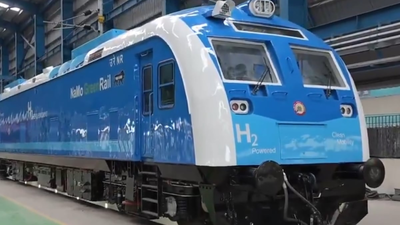
In a major move towards greener transportation, Indian Railways has completed the manufacturing of its first hydrogen-powered train on a pilot basis, following specifications laid out by the Research, Design & Standards Organisation (RDSO).“This project involved designing from first stages, prototype manufacturing and first-time development of hydrogen traction technology in Indian Railways,” said Union minister for railways, information & broadcasting Ashwini Vaishnaw in a reply in Parliament.He added that the project marks a significant step in adopting next-generation fuel technology for sustainable rail transport in India.
Here are five key things to know about the hydrogen-powered train:
- Hydrogen supply: A dedicated hydrogen plant has been set up at Jind, where hydrogen is produced using the electrolysis process, a key component of green hydrogen generation.
- Made in India: Designed and developed entirely in India, the train reflects Indian Railways’ commitment to
Atmanirbhar Bharat . - World-class scale: It is currently the world’s longest hydrogen train on a Broad Gauge platform, comprising 10 coaches, and also the most powerful at 2,400 kW.
- Powerful configuration: The train-set includes two Driving Power Cars (DPCs) of 1,200 kW each, totaling 2,400 kW, along with eight passenger coaches.
Zero emissions : The hydrogen-powered train emits no CO2, with water vapor being its only by-product.
Since the hydrogen train and its supporting infrastructure are currently developed on a pilot basis, direct cost comparisons with conventional diesel or electric trains are not yet feasible.Nonetheless, the project demonstrates Indian Railways’ commitment to alternative energy-powered train travel and a cleaner, greener future for India’s transportation sector.