Key sectors eye zero-duty EU access | India News
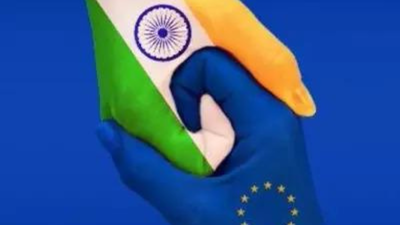
NEW DELHI: Ahead of the India-European Union free trade agreement – which is all set to be announced on Tuesday – all eyes are on several crucial sectors, where domestic industry has pitched for zero duty concessions to be able to compete more effectively with competitors, such as Bangladesh and Vietnam.Among the top asks is tariff elimination from sectors, such as textiles, marine products, sports and toys and leather – all labour-intensive segments.“Once the FTA is in place and we get zero duty, we can get more orders from the 27 countries in the bloc as we will be at par with Bangladesh, especially given the raw material advantage that we enjoy. A boost for apparel will also be good for the entire value chain, from cotton to fabrics and yarn,” said A Sakthivel, chairman of the Apparel Export Promotion Council. Currently, Indian garments face 11% duty in EU, compared with zero duty for Bangladesh-made products.
.
“Tariff cut will be a huge advantage for leather and footwear since we can be equally competitive with Vietnam, which has an FTA with EU. It will be a big help in this time of US tariffs,” said Israr Ahmed, director of Farida Group and former vice-president of Fieo.“Our competitors from Pakistan and Bangladesh get zero-duty access in EU. With the FTA, we are likely to get the same benefit. We expect our exports to EU to rise from the current $2.25 billion to 6 billion by 2030,” said Ramesh Juneja, chairman, Council for Leather Exports.Among sectors for opening up that are being closely watched are wines and automobiles, especially with Indian and European negotiators agreeing to keep out agriculture – the most contentious area in any trade dialogue.While Indian auto players are confident of managing costs and competing with their European counterparts, their big fear is Chinese companies using the trade pact to sell their EVs in India. As a result, it has sought protection – or at least a transition period – so that the domestic industry can come of age and its investment commitments are not hurt. It will also provide time for the Indian auto components makers to develop and be part of the global value chain.In the internal combustion engine space, for an industry where 90% of the sales is in the sub-Rs 25 lakh segment, the push is for protection in the middle and smaller segment. For European players too, selling vehicles that cost up Rs 15 lakh with on-road price tag of around Rs 25 lakh is difficult. The gains are likely for carmakers such as Mercedes, BMW and Audi. If the UK deal was a template, govt will phase out the concessions, slashing tariffs on cars in a phased manner from the current level of 110% and that too with quotas. EVs, which were not opened under the UK deal, may be given a longer transition period.Besides, there will be mobility related easing, helping Indian professionals and businessmen access to European markets.