
Maruti Suzuki e-Vitara vs Toyota Urban Cruiser Ebella: Key differences explained
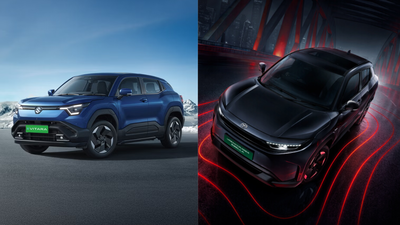
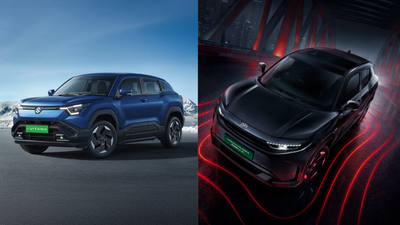
Maruti Suzuki has just launched the Maruti Suzuki e-Vitara electric SUV in the Indian market. Interested customers can pre-book the EV online or at their nearest dealership. The booking amount is set at Rs 21,000, and deliveries are expected to begin soon. The Maruti Suzuki e-Vitara competes with the MG ZS EV, Hyundai Creta EV, Tata Curvv EV, Vinfast VF6 and upcoming Toyota Urban Cruiser Ebella.The Maruti Suzuki e-Vitara and Toyota Ebella are the first fully electric models developed under their global partnership. Although both are based on the same platform, there are some differences between the two. In this article, we take a closer look at what sets them apart.
Maruti e-Vitara vs Toyota Ebella: Price, variants The Maruti Suzuki e-Vitara will be available in three variants – Delta, Zeta and Alpha – and will be offered with two battery pack options – 49 kWh and 60 kWh. The Delta with 49 kWh is priced at Rs 15.99 lakh, the Zeta with 60 kWh at Rs 17.49 lakh, and the Alpha with 60 kWh at Rs 19.79 lakh (all prices ex-showroom). The top-spec Alpha is offered with a dual-tone colour option at an additional price of Rs 22,000. The company is also offering a complimentary 7.4 kW AC charger with free installation. The new e-Vitara is also offered with Baas (Battery-as-a-Service option) at Rs 10.99 lakh with a plus battery EMI @ Rs 3.99 per km. Owners will receive free charging of up to 1,000 units or for a period of one year, whichever is earlier, at Maruti Suzuki dealership charging points, accessible via the ‘e for me’ app. The prices of the Toyota Ebella have not been announced yet. However, it is expected to carry a slight premium over the e-Vitara. Pre-bookings have begun, interested customers can book the car online or by visiting their nearest dealership by paying Rs 25,000. Maruti e-Vitara vs Toyota Ebella: Warranty details Maruti is offering an 8-year/1,60,000km warranty on the e-Vitara’s battery pack and a standard 3-year vehicle warranty. Buyers can opt for a 5-year extended warranty at an additional cost. The company is also providing an assured buyback programme. Under this plan, customers are eligible for 60 per cent buyback value after 3 years or 45,000km, and 50 per cent after 4 years or 60,000km. The Toyota Urban Cruiser Ebella also gets an 8-year battery warranty, a 60 per cent buyback assurance.
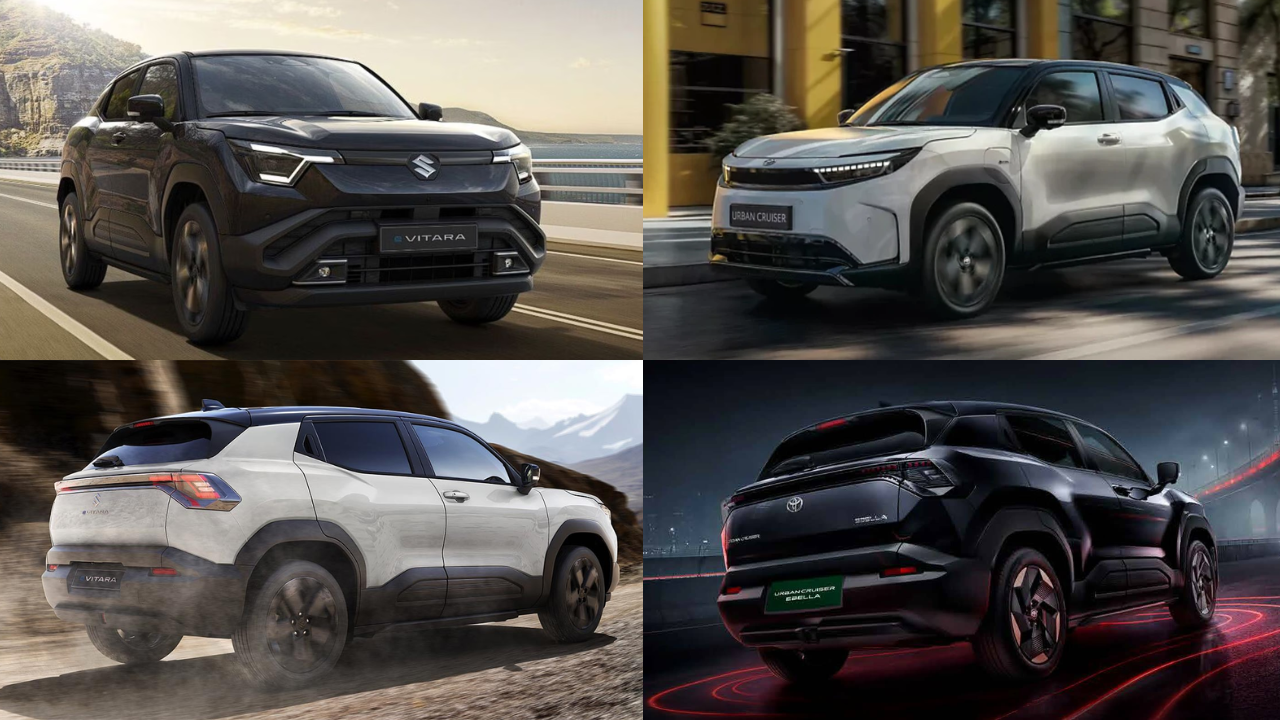
Maruti e-Vitara vs Toyota Ebella: Colour optionsThe Maruti Suzuki e-Vitara is offered in 10 colour options – Arctic White, Bluish Black, Grandeur Grey, Land Breeze, Opulent Red and Splendid Silver. Except for the Nexa Blue and Bluish Black hues, all other colours can be had with a dual-tone roof. The Urban Cruiser Ebella is offered in five monotone and four dual-tone colour options. The monotone shades include Cafe White, Bluish Black, Gaming Grey, Sportin Red and Enticing Silver. The dual-tone options comprise Cafe White, Land Breeze Green, Sportin Red and Enticing Silver, each paired with a black roof.Maruti e-Vitara vs Toyota Ebella: Design differencesThe e Vitara and Ebella differ mainly at the front, while the side and rear remain largely similar. The e-Vitara features Y-shaped LED DRLs, pronounced bumper cladding and fog lights. The Ebella uses segmented DRLs and a smoother bumper finish, and does not offer fog lights. In profile, both models share the same aero-optimised wheel design, C-pillar-mounted door handles and cladding along the doors and wheel arches. The Ebella carries ‘BEV’ badging to denote its electric powertrain. At the rear, changes are limited to a slightly revised tail-light signature. The sloping roofline and bumper design are otherwise identical.Maruti e-Vitara vs Toyota Ebella: Interior and featuresApart from their brand badges, the two models share an identical cabin layout and feature set. Both get a brown-and-black interior theme, a squarish two-spoke steering wheel, physical controls for climate and other functions, rectangular AC vents and a twin-screen arrangement.Features in both cars include a 10.25-inch digital instrument cluster, a 10.1-inch infotainment screen supported by wireless Android Auto and Apple CarPlay, cloud-based navigation, panoramic sunroof, ambient lighting with 12 colour options and ventilated front seats. Apart from that, it gets features such as wireless charging, a JBL sound system, automatic climate control, multiple USB ports, and an in-cabin air purifier. In terms of safety, the model gets seven airbags as standard, ABS, EBD, ESP, a 360-degree camera, and Level 2 ADAS functions such as Lane Keep Assist, Blind Spot Monitor, Adaptive Cruise Control, Rear Cross Traffic Alert and more.Maruti e-Vitara vs Toyota Ebella: Battery and rangeBoth e-SUVs get two battery pack options – 49kWh and 61kWh. The batteries use LFP (Lithium Iron-phosphate) ‘blade’ cells sourced by BYD. The 49kWh battery will come paired with a single motor placed on the front axle, which puts out 144hp. The bigger 61kWh battery also gets single-motor, but here it puts out 174hp. Both motors produce identical 189Nm of torque. Talking about range, the EV has a claimed range of 440 km with the 49 kWh battery pack, while the larger 61 kWh version is rated at 543 km on a single charge.