
Robert Kiyosaki education and career path: How a student who nearly failed school became the ‘Rich Dad Poor Dad’ author
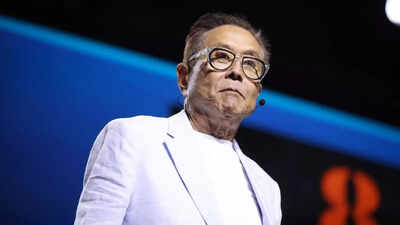
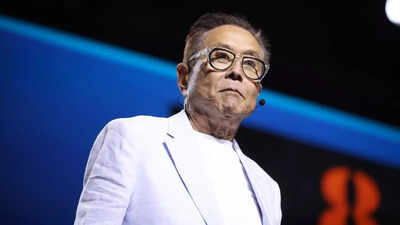
Education stories often move in straight lines: school, qualification, profession. Robert Toru Kiyosaki’s does not. His path runs through weak grades, military training, failed businesses and a later career built around teaching others what formal education, in his view, does not. The distance between those stages matters, because it helps explain how a student who struggled in school came to build a global financial education brand.
Growing up inside the education system
Kiyosaki was born in 1947 in Hilo, in the Territory of Hawaii, into a household shaped by public service. His father was an educator who rose to become Hawaii’s superintendent of schools. The family’s centre of gravity was institutional education, even as Kiyosaki’s own experience inside classrooms proved uneasy. He attended local schools and later Hilo High School, where he was nearly expelled because of poor academic performance. The tension between his father’s profession and his own record at school would later become a defining contrast in his writing.
Learning through structure rather than classrooms
Despite those struggles, Kiyosaki entered the United States Merchant Marine Academy in 1965. The academy offered a form of education that was structured but practical, combining technical training with discipline and clear outcomes. He graduated as a deck officer four years later. The shift mattered. Where school had been a place of friction, the academy provided rules, routines and skills tied to work.After time at sea with Matson, Inc., Kiyosaki joined the United States Marine Corps as an officer. He served as a helicopter gunship pilot during the Vietnam War and was based at Kaneohe Bay. Military service reinforced a pattern already visible at the academy: learning through command structures, risk and responsibility, rather than academic assessment. When his service ended, he returned to civilian life without a clear professional destination.
Early business failures and exposure to sales
His early business career was marked by failure rather than momentum. In 1977, he started a company selling nylon and Velcro wallets. The business collapsed. He then took a job as a sales associate at Xerox, where he worked briefly. These years did not produce lasting companies, but they did give Kiyosaki exposure to sales, marketing and commission-based work, skills that would later underpin his seminars and books.
From motivational courses to mass instruction
In the 1980s, Kiyosaki moved into motivational speaking. He became involved with a course called Money and You, which drew on methods associated with Erhard Seminars Training. Having taken the course himself in the 1970s, he later acquired the business with a partner and expanded it internationally. At its height, the programme enrolled large numbers of students across several countries. The business, however, faced public scrutiny and operational problems, including a crisis in Australia following a television investigation. Kiyosaki exited the venture in the mid-1990s.
Turning experience into curriculum
By this point, a pattern had formed. Kiyosaki’s career was less about building stable companies than about packaging experience into instruction. In 1993, he published If You Want to Be Rich and Happy, Don’t Go to School? The book set out an argument that formal education did not prepare people for financial life and that real estate and entrepreneurship offered a better route. The claim drew directly from his own history: academic difficulty followed by practical learning outside institutions.That line of thinking reached a wider audience with Rich Dad Poor Dad. The book framed financial education as something learned through mentors and practice rather than classrooms. It contrasted two figures, one aligned with traditional employment and one with investing and business ownership. The narrative was simple, but its appeal was broad. The book sold in large numbers and was translated into many languages.
Building an education business outside education
Around the book grew a network of products and companies. Kiyosaki founded entities that managed the Rich Dad brand, produced books and games, and licensed seminars to third parties. The Robert Kiyosaki life story flow board game and related materials aimed to teach financial concepts to adults and children through simulation rather than lectures. The structure mirrored his beliefs: learning as participation, not instruction.The business side of this education model was uneven. Some companies failed. One entity, Rich Global Limited Liability Company, filed for bankruptcy in 2012 following a legal dispute. Kiyosaki also settled a lawsuit with a former collaborator, which ended a long partnership. These episodes did not dismantle the brand, but they did show the gap between the promise of financial mastery and the risks of operating education as a commercial franchise.
A worldview shaped by schooling and its limits
Throughout his career, Kiyosaki maintained a critical stance towards schooling and traditional employment. He argued that wealth came from assets and leverage rather than qualifications and salaries. His books, by his own account, functioned as entry points to higher-priced seminars. Critics have questioned the substance of the advice and the practices of affiliated training programmes, but the reach of his ideas is not in doubt.
Education remade, not rejected
Seen together, Kiyosaki’s education and career path is less a story of rejection than redirection. He did not abandon learning; he rebuilt it on different terms. Early academic failure, followed by structured training in maritime and military settings, shaped his preference for applied knowledge. Business setbacks reinforced his focus on teaching through experience. The result was an education enterprise built outside schools, yet defined by a persistent argument about what education should be.For readers drawn to Rich Dad Poor Dad, the appeal often lies in its challenge to familiar routes. That challenge is rooted in biography. Kiyosaki’s career suggests how personal difficulty within formal education can lead not to disengagement, but to the creation of parallel systems of instruction, with their own markets, audiences and risks.