

Saudi Arabia to witness century’s longest Solar Eclipse on August 2, 2027 | World News
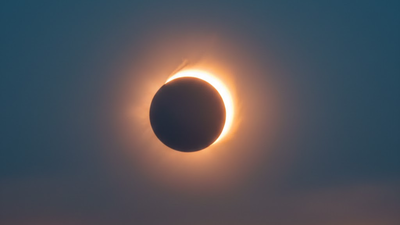
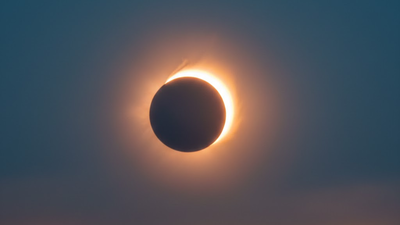
Get ready for a sky like no other. On August 2, 2027, a total solar eclipse, the longest in a century, will sweep across Saudi Arabia, North Africa, and southern Spain, plunging daylight into an eerie twilight for over six minutes. As the Moon perfectly blocks the Sun, its shimmering corona will frame the darkened disk, creating a breathtaking spectacle that will awe observers across three continents. This rare celestial event promises a once in a lifetime glimpse of the universe in action.
A rare path across three continents
NASA confirms that this eclipse’s shadow will trace an extraordinary path, touching three continents. It begins over the Atlantic Ocean and first reaches land in southern Spain and Gibraltar. From there, it moves across North Africa, covering Morocco, Algeria, Tunisia, Libya, and Egypt, before advancing into parts of the Middle East, including Saudi Arabia and Yemen. The shadow even extends to the Horn of Africa, reaching Somalia’s coast.The point of maximum eclipse will occur in southern Egypt, near the Nile cities of Luxor and Aswan, known for their ancient temples and archaeological treasures. Observers in this region will experience the full effect: the Moon will completely obscure the Sun for 6 minutes and 23 seconds, and the solar corona will glow vividly in the darkened sky. Areas outside this narrow path will see only a partial eclipse.
Why this eclipse lasts so long
Astronomers emphasize that the 2027 eclipse is unusually long due to a rare combination of cosmic conditions.
- Proximity: The eclipse occurs just hours before the Moon reaches perigee, the closest point in its orbit to Earth. This makes the Moon appear slightly larger in the sky.
- Distance: Earth will be near aphelion, its farthest point from the Sun, making the Sun appear marginally smaller.
Together, these factors allow the Moon to cover the solar disk for an extended interval, producing a totality that far surpasses recent eclipses. For comparison:
- The April 2024 eclipse over North America lasted 4 minutes and 28 seconds.
- A total eclipse visible in parts of Spain in August 2026 will last only 1 minute and 43 seconds.
- The last long-duration eclipse was on July 11, 1991, with 6 minutes and 52 seconds of totality.
Astronomers note that the theoretical maximum duration of a total solar eclipse is about 7 minutes and 32 seconds, constrained by the distances and motions of Earth, the Moon, and the Sun. Other extended eclipses are predicted later this century, including on August 12, 2045, and May 22, 2096, each lasting about 6 minutes and 6 seconds, but neither will surpass the 1991 or 2027 durations.
What to expect during totality
Observers along the path of totality should prepare for sudden and dramatic changes in their environment. During the eclipse:
- Daylight will fall to near-night for over six minutes.
- Temperatures may drop abruptly.
- Animal behavior may shift as if night had arrived unexpectedly.
Safety precautions are crucial. NASA and other experts stress never to look directly at the Sun without certified solar filters, except during the brief period of totality. Local authorities along the eclipse path will provide guidelines for safe observation.
Historical context and looking ahead
The 2027 eclipse will be the longest in a century, drawing comparisons to the 1991 event. While long eclipses are rare, they are predictable, with future opportunities already mapped out. For those who miss the 2027 spectacle:
- The next eclipse of similar length visible to a wide audience will be August 12, 2045, crossing the continental United States with over 6 minutes of totality.
- The next exceptionally long eclipse after that is not expected until the year 2,114.
In short, this is a must see event, a combination of precise celestial geometry and natural beauty, offering an experience that few generations will witness firsthand.