
What lies beneath Africa? Two enormous structures that appear not to belong to Earth |
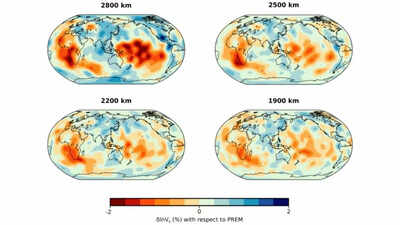
What is beneath the continent of Africa? There are two big structures down there that do not seem to be from our planet, Earth. Africa has a lot of things about it, but these two enormous structures are really strange. They do not look like they belong under Africa or on Earth, for that matter. Africa is a place with a lot of mysteries, and these structures are one of them.The thing is, these structures under Africa do not seem to be from Earth.Down in the earth under the continent, there are two huge things that scientists have found. These things are really down, too deep for any drill to reach. Scientists saw these things by looking at how seismic waves move. They are in the part of the Earth’s mantle thousands of kilometres down. These two things are really big. They are different from other things on Earth. Scientists are very interested in the Earth’s mantle and these two huge things because they want to know how the Earth was made and how it works. They want to know how the planet evolved and how it keeps working. Now we are learning more about the inside of the Earth because of better seismic imaging.
How enormous hidden formations beneath Africa were discovered
The two structures are called low shear velocity provinces. This is a term that describes areas where seismic waves move more slowly than they should. These areas are under Africa and the Pacific. The African structures go down for hundreds of kilometres. When earthquakes happen, they make waves. These waves change speed when they go through materials. The speed of the waves depends on how hot or cold the material is that it is made of, and how dense it is. In these areas, the waves slow down a lot. This means that the material in these areas is different from the material around it, in the mantle. The large low shear velocity provinces are special because the seismic waves move slowly through them.We can see the Earth in a lot of detail now because of new discoveries in global seismology. This means we can make maps of weird things inside the Earth. We have a lot of machines called seismometers that can feel the waves caused by earthquakes. When we look under Africa, we can see clear lines that separate different areas. This tells us that these areas have been around for a long time and are made of different things. They are not just changes in temperature.The fact that these areas have stayed the same for a long time is interesting. It makes us wonder how they can keep existing when the Earth’s mantle is always moving and mixing slowly.
What role subducted crust play beneath Africa
The deep mantle has some unusual features, and researchers have found a reason for them. They published their findings in a study published in Springer Nature Link. This study says that the weird structures in Africa are mostly made up of oceanic crust. This crust was pushed into the mantle a long time ago. It happened when one tectonic plate went under another, which is called subduction.Over a long time, hundreds of millions of years, this heavy crust built up near the core of the Earth and the mantle. It formed areas that are different from each other in terms of chemistry.The Earth’s crust that gets pushed down into the Earth behaves differently from the rock around it in the mantle. When the crust goes down, it. Gets heavier, and that means seismic waves can not go as fast through it. The crust does not just mix back into the mantle; some of it stays separate. That is why we see slow velocity provinces now. This idea makes sense with the data and what we learn from laboratory experiments on minerals when they are under a lot of pressure. It also fits with what we know about how the plates in the Earth’s crust move, rather than something outside the Earth affecting it.
Why do Africa’s deep mantle structures seem so unusual?
The African mantle structures are pretty weird when you look at them from the earths surface. They seem different from the rest of the mantle around them. People think the African mantle structures are hotter than usual, and that is why seismic waves move slowly through them. It is not just the temperature that makes them special. The kind of chemicals that make up the African mantle structures also play a part. For example, they have a lot of iron minerals that came from old oceanic crust that has been changed over time. The African mantle structures have a lot of these minerals, which is not typical.The Earth’s interior has compositions that affect how dense and thick it is. This changes how the structures inside the Earth interact with the flow of the mantle. Some ideas say that the edges of these structures are very clear and do not mix much with the mantle around them. This is why people compare them to objects from outside the Earth that are stuck inside, even though we now know they actually come from inside the Earth. The strange seismic signs and huge size of these structures make us question if the Earth’s interior is really mixed up well by the movement of the material inside the Earth. The Earth’s interior and its composition are very interesting to study, including the mantle flow and how it affects the structures.
Could Africa’s buried structures influence volcanoes and heat flow ?
The deep structures under Africa have an impact on the surface of the earth and how the planet behaves over time. These structures are often connected to mantle plumes. Mantle plumes are columns of material that move up towards the surface of the Earth. This hot material can cause volcanoes to erupt. Africa has areas with volcanoes and large amounts of igneous rock. Some scientists think that the deep structures under Africa help create or hold in place these areas of activity.Beyond volcanism, the structures influence heat transfer from the core to the mantle. Their insulating properties may affect how heat escapes the core, with potential consequences for the geodynamo that generates Earth’s magnetic field. Understanding their composition and behaviour, therefore, extends beyond regional geology, touching on processes that govern planetary stability over deep time. As seismic techniques continue to improve, these hidden giants beneath Africa remain central to efforts to comprehend the complex, layered nature of the Earth’s interior.Also Read | Newly discovered sea cow species resembles modern dugongs found near Qatar