
Why TISS is bringing back elections, but not the freedom that comes with them
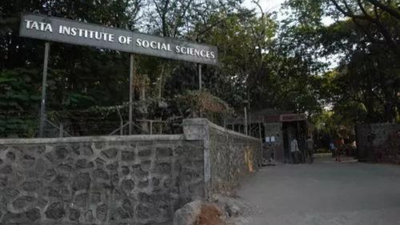
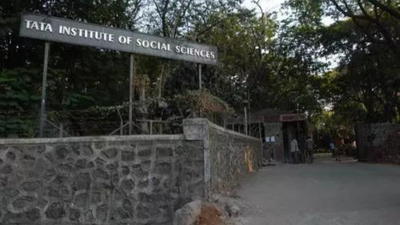
The Tata Institute of Social Sciences (TISS) is restoring student representation after a gap of nearly two years, but the return of elections has opened a new argument over neutrality, participation and control. The Students’ Council elections are scheduled to be held on February 6, 2026. For the upcoming polls, candidates have been asked to submit an undertaking declaring that they are not affiliated with, nor represent, any political party, political organisation or student wing linked to such parties. What the administration describes as a routine requirement has been read by sections of the campus as a restriction that goes beyond procedure and into principle.
Why the undertaking is being contested
The undertaking has drawn opposition from students who see it as an attempt to undermine constitutional rights, particularly freedom of association and expression. A student told TNN that the language mirrors changes made to the institute’s honour code in 2024, amendments that were also met with resistance at the time. The concern, the student said, is that the requirement runs contrary to the Students’ Council constitution, which allows students to associate with organisations and hold political affiliations.
The administration’s assurance
An institute official sought to play down the impact of the undertaking, saying that it would not be used to disqualify candidates. The official said the declaration has been part of an existing process and added that the specific condition would be reviewed from the next election cycle. “Students need not worry about it. In any case, the oath taken by elected representatives after the elections will carry more relevance later than this undertaking,” the official said, TNN reports.
Why students remain unconvinced
That assurance has not settled the matter on campus. Students argue that the broader context of the elections makes the undertaking harder to dismiss as symbolic. Another student said the authority of the students’ union has already been diluted under the proposed Students’ Council constitution. While the administration invited suggestions on the draft, the timeline meant that nominations had already begun. Friday was the last day to submit feedback, while Thursday was the final date for nominations. Restrictions on campaigning have added to the unease. “It just shows that the institute will be opposed to dissent even in future,” the student said, TNN reports.
What else the undertaking requires
Beyond political affiliation, the undertaking also asks candidates to declare whether any disciplinary action, inquiry or adverse proceedings are pending or have been initiated against them by the institute. Candidates are required to have maintained a minimum attendance of 75 percent in previous semesters and to have no academic arrears in the year they are contesting the election.
Ambiguity and the fear of exclusion
Media reports have expanded on the nature of the objections, particularly around the wording of the declaration. Students have described the language as vague, arguing that the absence of a clear definition of what constitutes a political organisation or student wing leaves room for arbitrary interpretation. According to media reports, some aspirants are uncertain whether their past or present association with student collectives could be read as a violation, creating a chilling effect on participation.Students have again drawn parallels with the 2024 amendments to the honour code, which they had opposed on the grounds that the changes diluted constitutional protections. They argue that the current undertaking cuts against the stated spirit of the Students’ Council constitution, which permits political views and associations. The administration has responded by reiterating that the declaration is intended only to ensure neutrality in the electoral process and should not be misconstrued. It has maintained that the undertaking will not be used to qualify or disqualify candidates. Students, however, have demanded that the language be revised to remove ambiguity and ensure fairness.
A larger reset of student representation
The dispute has unfolded against the backdrop of a restructuring of student representation at the Mumbai campus of TISS. Nearly two years after student unions were suspended, the institute released a draft constitution for a new Students’ Council on January 23 and announced elections, stating that the framework aligns with Lyngdoh Committee recommendations. The new structure replaces the traditional students’ union with a Students’ Council made up of class wise elected representatives and committees focused on culture, sports, literature, health and mentorship. The administration has said the model is designed to maintain campus discipline, improve coordination among student activities and protect the academic environment.
The unresolved question of trust
Student organisations remain unconvinced. The Progressive Students Forum (PSF) has accused the administration of weakening student democracy and introducing a new system without adequate consultation. While the draft constitution describes itself as student driven, the forum has questioned which students were involved in its drafting.What is unfolding at TISS is less a dispute over whether elections should be neutral and more a disagreement over how neutrality is defined and enforced. For the administration, the undertaking is a procedural safeguard. For protesting students, it is part of a pattern that narrows the space for association and dissent. As the institute attempts to restore student representation, the challenge will be whether it can do so in a way that commands confidence across the campus, rather than deepening suspicion at the very moment participation is meant to resume.