
Zohran Mamdani’s next big test: Can New York’s new mayor fix America’s most complex school system?
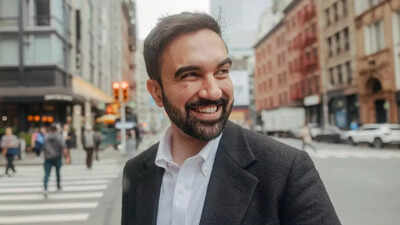
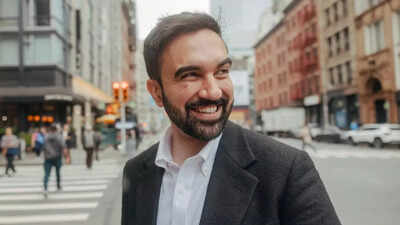
When Zohran Mamdani swept into New York’s mayoral office promising free child care for all babies and toddlers, he captured the imagination of voters with a pledge that was both bold and humane. But as the newly elected mayor prepares to take charge in January, another daunting responsibility awaits him, and that is the stewardship of the largest and most complex public education system in the United States.According to NYC Department of Education, New York City’s 1,500 schools serve nearly 900,000 students and operate on an annual budget of about $41 billion, a scale comparable to the economy of a small nation. Managing it will test Mamdani’s political skill, fiscal discipline, and reformist instincts more than any campaign promise so far.
Learning the system he now leads
Mamdani, 34, has not yet unveiled a full vision for the city’s education future. His priorities include recruiting more teachers, expanding support for homeless students, and curbing wasteful spending within the Department of Education. He has acknowledged that he is still learning the intricacies of the system he is about to lead.His first major decision, which is the appointment of a schools chancellor, will signal the direction of his education policy. Union leaders, who were early backers of his campaign, are expected to play an influential role. Michael Mulgrew, president of the United Federation of Teachers, has publicly urged Mamdani to retain Melissa Aviles-Ramos, the current chancellor, the New York Times reports. Another contender, Meisha Ross Porter, who previously held the role, remains well-regarded among educators and administrators.
A shrinking student population
New York’s schools are facing a sharp demographic decline. Once serving over 1.1 million students, the system now educates around 880,000, a fall driven by families relocating to more affordable cities and by declining birth rates. This contraction poses difficult questions for the new administration: whether to merge or close under-enrolled schools, and how to equitably allocate funding across districts.The temporary enrolment stabilisation from the influx of migrant children has already begun to wane. Forecasts suggest that student numbers may continue to drop in the coming years, intensifying pressure on already strained budgets and facilities.
Confrontation with Washington
The incoming mayor’s education policies will also unfold under a potentially adversarial federal government. New York’s schools allow students to use bathrooms that align with their gender identity and teach curricula on race, culture, and sexuality — policies that the Trump administration has openly criticised.Under outgoing mayor Eric Adams, the city maintained a cautious relationship with Washington, avoiding direct conflict. Mamdani, a progressive Democrat, is expected to take a more assertive stance, which could invite friction. In similar cases, the US Education Department has already withheld funds from states over disputes on gender and inclusivity policies.Although federal money accounts for only about 6% of New York’s education budget, even minor disruptions in that stream could have widespread consequences for students and families.
The reading challenge
Among the most urgent issues Mamdani inherits is the city’s ongoing literacy crisis. For decades, New York has struggled to ensure basic reading proficiency across its schools. More than half of Black and Latino students remain below state benchmarks, and according to government data, the share of pupils performing at the lowest level on national reading assessments has risen over the past 15 years.The Adams administration introduced a new reading curriculum and early results appeared promising. Experts say sustaining that progress will be critical. Evan Stone, co-founder of Educators for Excellence, told The Times that this is “the moment to double down on the work”. The challenge, however, will be ensuring that early reforms translate into systemic change under new leadership.
Political landmines
Few issues in New York politics ignite as much passion as education. Despite not ranking high in election surveys, it can rapidly dominate the public agenda. Mamdani’s campaign learned this when a brief comment about gifted and talented programmes sparked days of debate, illustrating how education reform can polarise constituencies.History offers cautionary tales. Former mayor Bill de Blasio’s attempt to alter admissions to elite public high schools, without extensive consultation, alienated segments of the city’s Asian American community. Eric Adams, meanwhile, faced backlash over his handling of the city’s free pre-kindergarten initiative, damaging his standing with young families. Mamdani will be acutely aware that a misstep in education policy can erode political goodwill faster than any other issue.
Inequality that defies reform
Perhaps the most entrenched challenge is inequality. The quality of education in New York still varies starkly by race, income, and postcode. In affluent districts, parent-teacher associations raise hundreds of thousands of dollars annually, while schools in low-income areas often struggle with students living in shelters or temporary housing.For children with disabilities, access to essential services like speech therapy or learning support can hinge on whether a parent has the time and means to navigate a labyrinthine special education bureaucracy. It is within these inequities that Mamdani’s promise of fairness will be tested most visibly.
A defining test of leadership
For Zohran Mamdani, the city’s sprawling public school system represents both opportunity and peril. It is a chance to redefine what equitable education looks like in one of the world’s most complex urban settings, and a risk that missteps could erode the progressive momentum that carried him into office.The next four years will reveal whether New York’s new mayor can translate idealism into governance, and whether his administration can finally deliver on the enduring promise of America’s public schools.